 E
E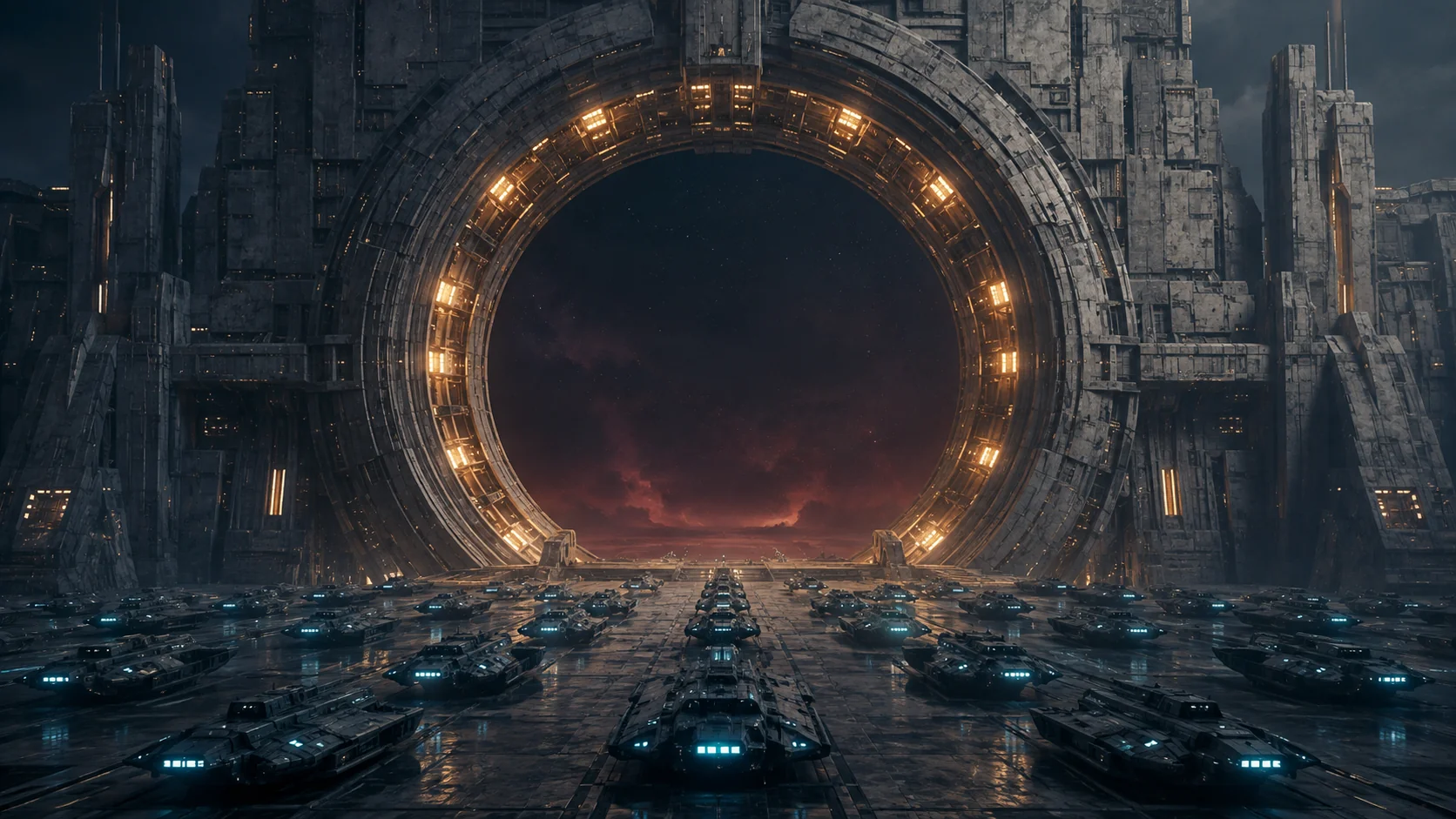
The Closing of the Doors
The convoy that survived the Crossing reached the Ethereal Expanse and found that arrival did not mean safety: the raiders who could not be outrun had crossed with it, not arrived after it. What began as a region-wide hunt across all nine systems failed to hold them. What worked instead was narrower — and it is the moment the Nexus Protectorate and the Crimson Corsairs became two organized, named powers, rather than one convoy carrying an argument.
The convoy that survived the Crossing reached the Ethereal Expanse and found that arrival did not mean safety: the raiders who could not be outrun had crossed with it, not arrived after it. What began as a region-wide hunt across all nine systems failed to hold them. What worked instead was narrower — and it is the moment the Nexus Protectorate and the Crimson Corsairs became two organized, named powers, rather than one convoy carrying an argument.
Arrival Was Not Safety
The raiders were never an outside threat. They were passengers — same convoy, same ships — and once the fleet came to rest, they turned on the freight lanes the fleet itself now depended on. Chasing them system by system across the whole Expanse cost more than it ever won back. Something had to change, and it was not the raiders who changed it.
Two Doors, Held
The Expanse has exactly two ways out: Phoenix Terminus and Dark Matter Reach. Rather than keep hunting raiders across nine systems, the fleet that would become the Protectorate took and fortified those two gates and nothing else. Every haul now had to clear a garrison to leave. Raiding did not stop because the raiders lost — it stopped because it stopped paying.
The doors were never sealed shut. They were garrisoned, and they still are today — ships pass through both, watched the whole way. Closing the doors meant closing the argument over who controlled passage, not closing the passage itself.
The two doors do not open onto the same kind of ground, either. Beyond Phoenix Terminus waits raider country. Beyond Dark Matter Reach waits the Void Dominion, an order that was never hostile at all — the garrison there marks a boundary between two legitimacies, not a line against an enemy.
Where the Corsairs Went
Pushed off the lanes they used to work, the raiders who would take the name Crimson Corsairs fell back on Crimson Sector, the ground immediately beyond the hot door — their first home once the doors closed, and the place their name still points to. What followed was not one clean break but a long, gradual retreat, tier by tier, deeper into the frontier, until their only permanent ground left was the far edge of the map, the Outer Periphery. Crimson Sector itself was never fully abandoned: old raiders still work its approaches, on ground they once held outright and have never fully given up.
What Still Stands
Both names carry the mark of where they were finally drawn: Nexus Protectorate, for Helios Nexus, the system the fleet made its seat; Crimson Corsairs, for the sector the raiders fell back to. Neither name could have existed before the ships came down — the argument only became two powers once it had two places to be drawn from.
The post that still stands watch at that seat belongs to Warden Kael, anchored there and never patrolling. His office traces its authority to this same founding choice — hold, rather than chase — not a claim that Kael himself stood at the Closing, nor a claim about how long the post has stood since. Only the choice endures: once a line is worth holding, someone stands in it permanently, and someone still does.